
By Jeremy Mitchell, Field Service Proposal Solution Specialist
Substations are a vital part of your business’s critical infrastructure, and keeping these power stations reliable is key to avoiding problems, protecting your equipment, and improving operational efficiency. Reliability starts to slip, though, when a substation suffers from poor maintenance and aging infrastructure. The encouraging part is that proactive steps on your end can head off many of these disruptions. This article gives a brief look at good maintenance practices, the challenges of modernization, and how retrofitting compares with full replacement.
Substation Maintenance
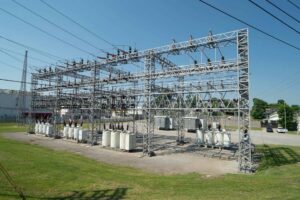
Any conversation about maintenance should start with what a substation does and why it matters. Substations are an important link in your facility’s power distribution process, adjusting voltage levels so energy can be transmitted efficiently. By stabilizing those levels, they help prevent grid faults and manage power flow, which ultimately delivers a dependable electrical supply to your equipment. Routine maintenance is invaluable here, since it prevents equipment failures and extends the life of critical components.
Skipping proper maintenance can create a long list of problems for your equipment and facility over time. A greater risk of safety hazards such as fires and electrical faults, along with reduced system efficiency, can bring significant financial losses, regulatory penalties, and damage to your company’s reputation. Making routine maintenance a habit and putting system health first today can spare you future headaches and unnecessary equipment replacements.
It also helps to know which key components need regular assessment and testing. Routinely inspecting transformers, circuit breakers, switchgear, and protective relays is crucial to your facility’s health. Closely monitoring grounding, insulation, and cooling systems for wear, damage, or inefficiency lets you stay ahead of issues and, ideally, catch them before they develop. To see some of the routine testing we perform as part of our evaluation process, click here. How often inspections and maintenance should happen depends on factors like equipment type, age, usage, and environmental conditions. As a general rule of thumb, though, plan on monthly visual inspections, annual maintenance, and comprehensive assessments every couple of years. Once you’ve evaluated your areas of concern, you can take the right steps to improve operational efficiency.
With the right tools, methods, and procedures, preventive maintenance protects the long-term operation of your substation and its equipment. Pairing solid maintenance with modernization can further improve safety and reliability by addressing both existing wear and outdated technology.
Upgrading Challenges
The challenges below deserve careful thought before you begin. Investing plenty of time in pre-planning helps you minimize downtime and make a smooth transition to your new equipment and components. Upgrading brings real benefits, from improved safety and reliability to easier maintenance and greater efficiency. Still, the challenges that come with modernizing a substation are a key factor in the decision.
Aging infrastructure can be a reason to upgrade, but it can also stand in the way of reaching your goal. Older equipment in your facility may not be compatible with the modern systems now available. Added complexity can mean extensive modifications or even complete replacements to accommodate the upgrades, along with space limitations and safety standards to address. Outdated or missing documentation makes things harder still, since it complicates planning an upgrade for your facility. Between these obstacles and the financial and logistical considerations, the process can become difficult without proper preparation. A good place to start planning is deciding which upgrade method best fits your facility’s needs.
Retrofitting vs. Replacement
When upgrading your facility, you’ll need to choose between retrofitting and a complete replacement. Each option has its own pros and cons, and both should be evaluated thoroughly against the needs of your facility and project.
Retrofitting
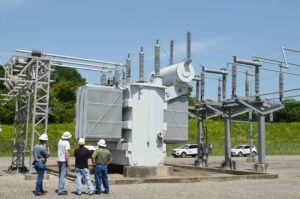
Retrofitting means upgrading your facility’s existing equipment, structures, and systems to improve their capabilities. It differs from a full replacement because the improvements are made without swapping out the original equipment. For many facilities, retrofitting is an ideal way to preserve existing infrastructure in a cost-effective and customizable manner.
Pros
The benefits of retrofitting are what you’d expect from a more minimal approach. Below are the four advantages I believe come with approaching your project through retrofitting.
-
Minimized Downtime: Retrofitting lets you make smaller changes to your systems over time, which reduces unscheduled downtime and service interruptions.
- Infrastructure Preservation: You keep the equipment that doesn’t need replacing during the upgrade. Along with saving money, this means your facility doesn’t have to dismantle or replace entire systems.
- Quick Installation: Because retrofitting is more modular, installation can move quickly during a scheduled outage, since your facility’s foundational equipment is typically reused.
- Cost Efficiency: As noted above, this method costs less because it builds on equipment you already have. Spending on disposal and new layouts is also lower than with a full replacement.
Cons
Every decision has its trade-offs. The drawbacks of retrofitting lean toward integration and longevity, as you’ll see below.
- Limited Lifespan: Retrofitting can’t fully resolve the problem of aging equipment. It may ease some aging-infrastructure issues, but adjusting old equipment can leave your substation needing further upgrades down the road.
- Compatibility Issues: The upgrades you want may simply not integrate with your existing infrastructure. Your team may then need to approach the problem from an engineering standpoint and find ways to make the equipment or component suit your project.
- Performance Constraints: Much like compatibility, the performance of retrofitted gear can be at odds with older equipment, leading to less-than-optimal results and a further need for upgrades.
- Hidden Issues: Unforeseen problems, such as unseen weaknesses or damage in your system, can surface. This isn’t unique to retrofitting, but newly discovered damage can mean entire sections of equipment need maintenance, repair, or additional upgrades.
Replacement
Where retrofitting aims to limit how invasive the upgrade is, a full replacement is a major overhaul of your system’s equipment. Below are four benefits to weigh when considering this approach.
Pros
The advantages of full replacement generally center on the performance and longevity of the new equipment. Here are the four benefits of taking the full replacement route for your infrastructure upgrades.
- Enhanced Performance and Reliability: Modern components are more advanced, more reliable, and better able to handle the demands your facility places on them. New equipment also brings improved safety and greater confidence that aging components won’t put the health of your system at risk.
- Scalability: Modern systems can be installed with the future in mind. This kind of structure lets your equipment evolve with the latest standards and gives your team room to plan for, and fully integrate, future expansions.
- Extended Lifespan: New equipment is a fresh start. The new components reduce maintenance costs and extend the operational life of your setup.
- Improved Safety: A full replacement lets your systems incorporate modern, updated safety features, lowering risk to both your facility and your team.
Cons
The drawbacks of a full replacement mostly involve facility downtime and longer adjustment periods. Below are the three main downsides I’ve run into with an entirely new system.
- Costly Start-Up: Because of the scope of the project, a full replacement is far more expensive than retrofitting. Materials, labor, and structural work all require more involvement, which drives up the overall cost.
- Long Downtime: Replacing a large share of your components means shutting down the system while the work is done. A retrofit may involve only partial, brief outages, but a full replacement is significantly longer and can disrupt productivity, leading to financial loss.
- Adjustment Period: A completely new system comes with a learning curve. Your team may need new and potentially extensive training, which adds to the cost and timeline of the upgrade.
Real World Application
Understanding the challenges, along with the pros and cons of retrofitting and full replacement, is an important first step in the upgrade process. How you put that knowledge to use will help you choose the best option for your facility. To show the kinds of challenges that can come up along the way, here is a brief look at a project I worked on.
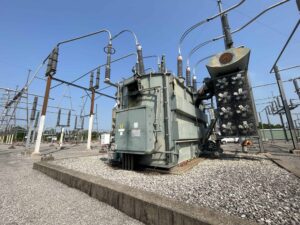
My team was retrofitting the bushings on a client’s set of transformers. The new bushings didn’t fit directly into the transformer because the turret was too tall. These transformers were sixty to seventy years old, and manufacturers no longer make updated bushings that drop into units that age. They used to offer more direct replacements but have since shifted toward more universal options. That left us with new equipment that didn’t integrate the way we wanted. With few alternatives available, we resolved it by modifying the transformer’s turrets. The turret that the bushing connected to had no CTs, which gave us the option to change its height to better accommodate the bushings. We engineered a solution that adjusted the height so we could set the depth of the bushings inside the transformer tank, and then modified the connections to the bushings to finish resolving the issue. This allowed us to complete the retrofit without fully replacing the units.
Pre-planning can head off many of the challenges your team may face, but sometimes the nature of an upgrade presents immediate problems that need attention. Whether it’s on-the-spot equipment adjustments or changing a turret’s height to install bushings, it’s important to know the challenges ahead of time and have solutions ready to keep project difficulties to a minimum.
Closing Thoughts
Maintaining and modernizing your substation infrastructure is essential to operational reliability, safety, and efficiency. By prioritizing routine maintenance and addressing aging infrastructure, businesses can extend the life of critical equipment and reduce the risk of costly failures. When it’s time to modernize, understanding the challenges and weighing retrofitting against full replacement lets you make informed decisions that fit your facility’s unique needs. Retrofitting offers cost-effective solutions with minimal disruption, while full replacement delivers enhanced performance, scalability, and safety. In the end, proactive planning, regular assessments, and a clear upgrade strategy are the keys to overcoming potential challenges and achieving a smooth, successful modernization.
Increasing Equipment Service Life
Your one-stop service support for all your transformer and switchgear needs!
Find out how SGB-SMIT USA can elevate your company’s operation. Request a Quote